
As I picked up a plump eggplant at the farmer’s market, the bustling atmosphere teemed with summer’s bounty—zucchini, vibrant bell peppers, and fragrant basil just begging to come together in a pot. This traditional ratatouille recipe perfectly showcases these seasonal treasures, bringing joy to your table with every colorful layer. Not only is it vegan and gluten-free, but it also offers a comforting embrace with its rich, simmered flavors that linger long after the meal. Whether you’re hosting a family dinner or simply want to savor a quiet evening, this ratatouille will delight everyone. Curious about how to transform these fresh ingredients into a delicious masterpiece? Let’s dive into the heart of French comfort food!
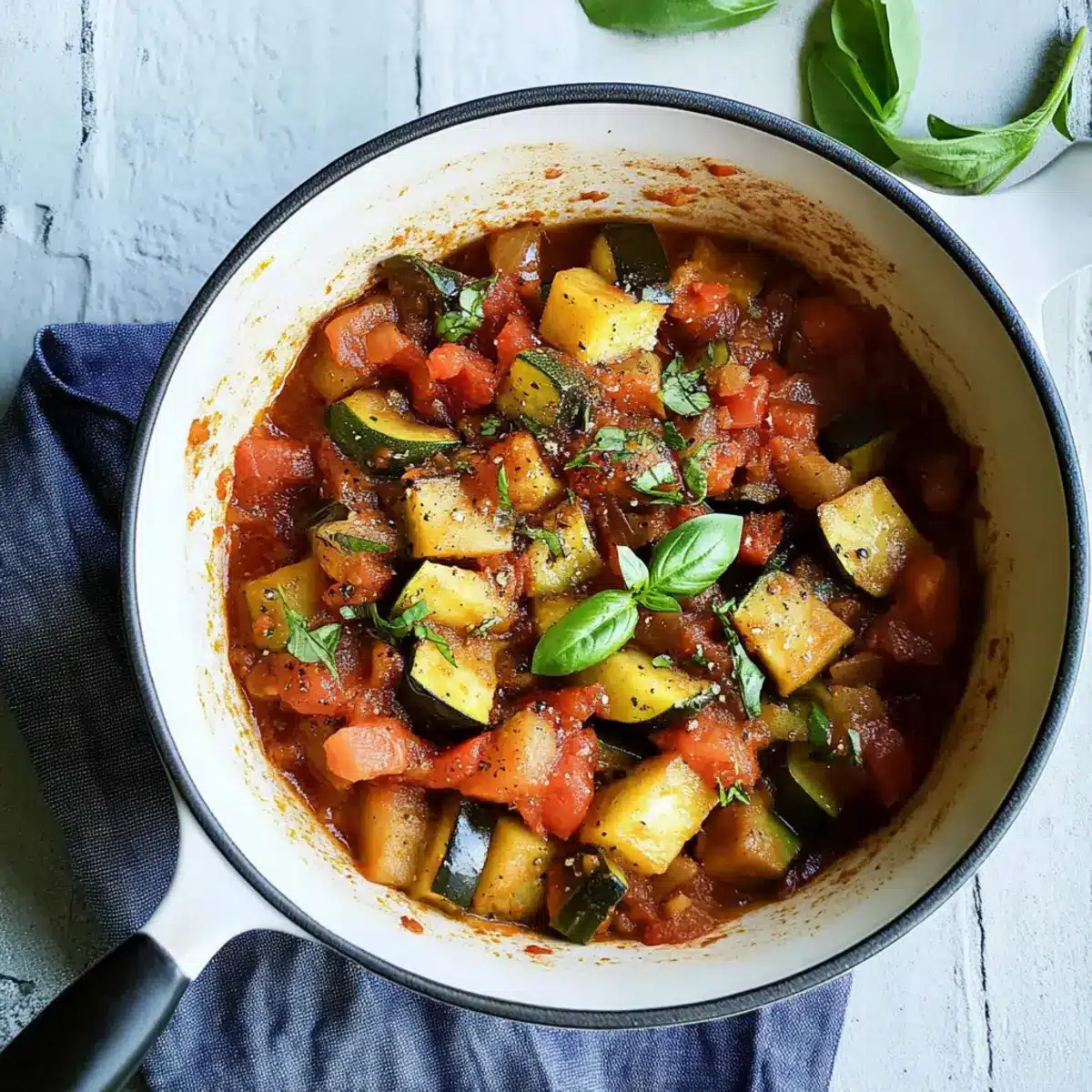
Why is Traditional Ratatouille a Must-Make?
Simplicity: This dish requires minimal ingredients and straightforward steps, making it accessible for both novice and seasoned cooks.
Flavor Explosion: The blend of summer vegetables and aromatics creates a depth of flavor that is both comforting and satisfying.
Meal Prep Friendly: Ratatouille tastes even better the next day, making it an ideal candidate for your weekly meal prep; you can enjoy it over grains or as a side dish.
Versatile: Perfect as a main course or a side, this dish complements any protein or can stand alone as a hearty vegetarian delight.
Healthy Comfort Food: With around 249 calories per serving and packed with nutrients, this recipe is a guilt-free indulgence you’ll want to share with family and friends.
Ready to bring the taste of France home? Try out this Traditional Ratatouille and see why it’s beloved by so many!
Traditional Ratatouille Ingredients
For the Vegetables
• Eggplant – Adds a creamy texture; peeling is optional, but the skin enhances nutrition and color.
• Red Onion – Provides a sweet and deep flavor; yellow onion can be a good substitute if you prefer.
• Bell Peppers – Add sweetness and vibrant colors; use a mix of red, yellow, or even green for variety.
• Zucchini – Offers a mild flavor and soft texture; feel free to swap it with summer squash for a twist.
• Yellow Squash – Delivers a tender bite; you can replace it with extra zucchini if desired.
For the Sauce
• Plum Tomatoes – Form the base of the stew and add juiciness; canned tomatoes can substitute if fresh aren’t available.
• Crushed Tomatoes – Ensure a thick, rich sauce; opt for low-sodium versions for a healthier option.
• Garlic – Enhances the overall flavor; minced or crushed garlic works best.
• Dry White Wine – Adds acidity and depth; replace with vegetable broth or a mix of water and white wine vinegar if avoiding alcohol.
For the Seasoning
• Bay Leaf – Infuses the dish with a deep flavor; remember to remove it before serving.
• Dried Oregano – Adds aromatic herbal notes; rub it between your fingers before adding to release its full flavor.
• Crushed Red Pepper Flakes – Introduces a hint of spiciness; adjust the amount to suit your taste.
• Fresh Basil – Provides a burst of freshness; add it at the end for maximum flavor impact.
With these traditional ratatouille ingredients, you’ll be well on your way to creating a delicious, comforting dish that everyone will love!
Step‑by‑Step Instructions for Traditional Ratatouille
Step 1: Prepare Eggplant
Begin by dicing the eggplant into bite-sized pieces and placing it in a colander. Sprinkle generously with salt, allowing it to drain for 20–30 minutes. This process helps remove excess moisture and bitterness. After the time has elapsed, rinse the eggplant under cold water and pat dry with a paper towel.
Step 2: Cook Eggplant
In a large Dutch oven, heat a couple of tablespoons of olive oil over medium heat. Add the drained eggplant and sauté for about 5–7 minutes, stirring occasionally, until it becomes softened and lightly browned. Once done, transfer the cooked eggplant to a bowl and set aside.
Step 3: Sauté Squash
Utilizing the same pot, add a bit more olive oil if needed and toss in the diced zucchini and yellow squash. Cook them for about 4–5 minutes, stirring frequently until slightly golden. Once done, add these to the bowl with the eggplant, keeping all those lovely flavors together.
Step 4: Sauté Onions and Peppers
In the same pot, add the chopped red onion and sauté for 4–5 minutes until it becomes translucent and fragrant. Next, incorporate the diced bell peppers into the pot and cook for an additional 3–4 minutes until they soften, thus enhancing the mix of flavors for your traditional ratatouille.
Step 5: Combine Tomatoes and Garlic
Stir in the chopped plum tomatoes and minced garlic, cooking for 1-2 minutes until the mixture is fragrant and the tomatoes begin to break down. This step is crucial, as it adds a robust foundation to the traditional ratatouille that you’ll cherish.
Step 6: Add Liquids and Spices
Pour in a cup of dry white wine and let it simmer for a minute for the alcohol to cook off. Then, add the crushed tomatoes, bay leaf, dried oregano, and crushed red pepper flakes, giving it all a good stir. Incorporate the previously sautéed vegetables back into the pot and mix thoroughly.
Step 7: Simmer
Reduce the heat to low and let the ratatouille simmer uncovered for 20–25 minutes. This allows the flavors to meld beautifully while ensuring the vegetables become tender and absorb the delicious tomato base, creating a savory masterpiece.
Step 8: Finish
Before serving, season your traditional ratatouille with salt and pepper to taste. Finally, stir in a handful of freshly chopped basil for a burst of flavor. Allow it to rest for a few minutes, and then it’s ready to be shared and enjoyed!
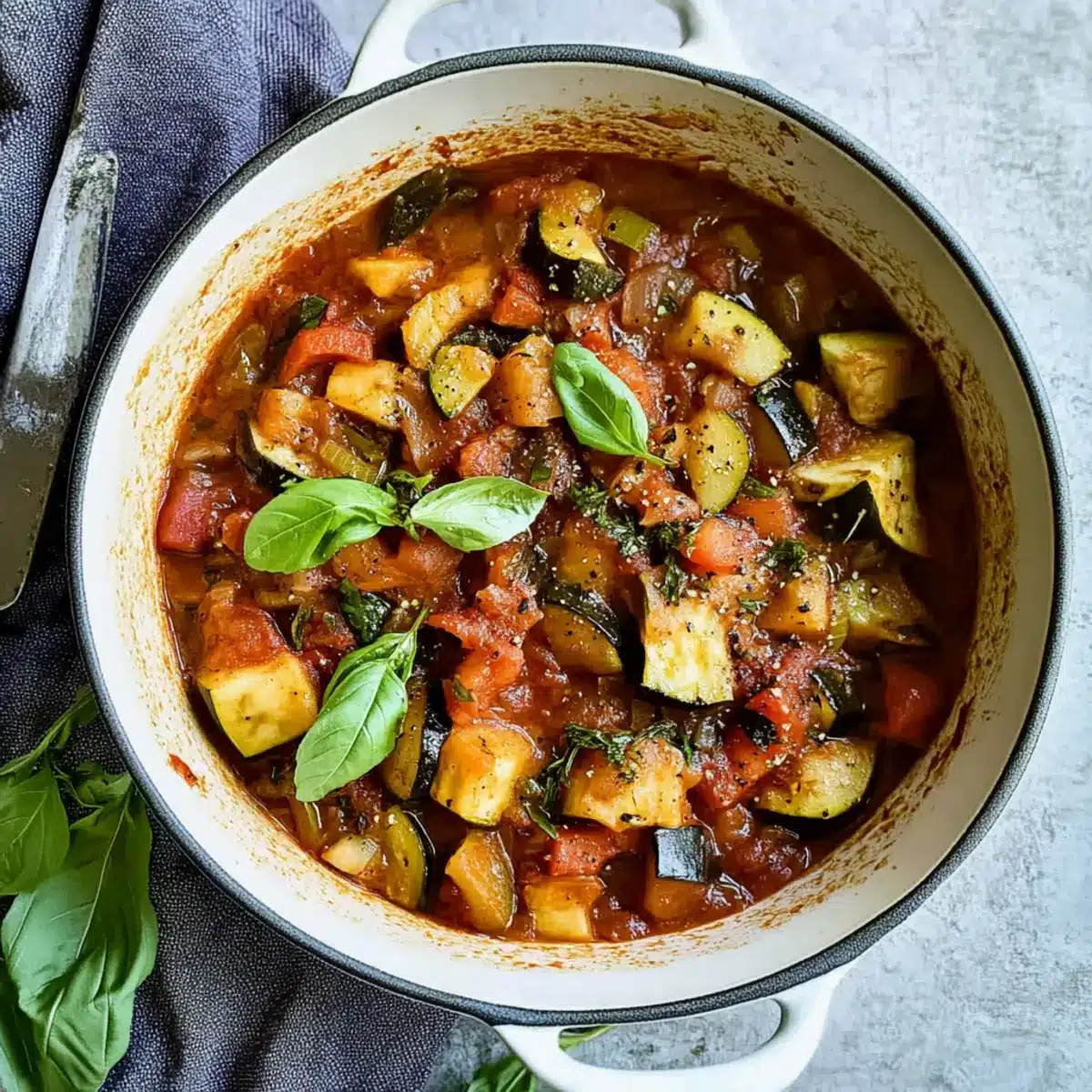
What to Serve with Traditional French Ratatouille?
Elevate your dining experience by pairing this comforting classic with delightful complementary sides and flavors that enhance its vibrant essence.
-
Creamy Polenta: Its smooth texture balances the chunky ratatouille, creating a warm and comforting contrast that’s simply irresistible.
-
Crispy Baguette: A fresh, crusty baguette serves as the perfect vessel for scooping up the tender vegetables, enhancing the communal feel of your meal.
-
Quinoa Salad: The nutty flavor and fluffy texture of quinoa add a wholesome element, and a dash of lemon juice brings brightness to the plate.
-
Roasted Garlic Mashed Potatoes: These silky potatoes provide a buttery richness that complements the ratatouille beautifully, making every bite a flavorful indulgence.
-
Herbed Couscous: Fluffy couscous sprinkled with fresh herbs offers a light, aromatic base that pairs perfectly with the savory notes of the ratatouille.
-
Grilled Lemon Chicken: The bright acidity of lemony grilled chicken contrasts delightfully with the earthy vegetable stew, making it a balanced meal.
-
Fresh Arugula Salad: A crisp arugula salad dressed with balsamic vinaigrette adds a peppery bite, bringing freshness that cuts through the rich stew.
-
Red Wine: A glass of light-bodied red wine like Pinot Noir complements the dish’s deep flavors, enhancing your dining experience with each sip.
-
Homemade Sorbet: For dessert, a refreshing fruit sorbet cleanses the palate after a satisfying meal, leaving a light and joyful ending.
Storage Tips for Traditional Ratatouille
Fridge: Store your ratatouille in an airtight container for up to 4-5 days. This allows the flavors to meld for a delicious meal throughout the week!
Freezer: For long-term storage, freeze the ratatouille in portions for up to 2-3 months. Use freezer-safe bags, removing excess air to prevent freezer burn.
Reheating: Thaw frozen ratatouille in the refrigerator overnight. Reheat gently on the stovetop or in the microwave until heated through, enhancing the comforting flavors of the traditional ratatouille.
Expert Tips for Traditional Ratatouille
- Drain Eggplant: Be sure to salt and drain the eggplant thoroughly to avoid a greasy ratatouille. This step enhances the dish’s texture.
- Cook in Batches: When sautéing the vegetables, avoid overcrowding the pot. This ensures proper browning and flavor development for each ingredient in your traditional ratatouille.
- Flavor Improvement: Let your ratatouille sit for a day in the fridge; the flavors will deepen, making it even more delicious the next day.
- Herb Rubbing: To release the essential oils and maximize flavor, rub dried oregano between your fingers before adding it to the pot.
- Adjust for Spiciness: If you prefer a milder ratatouille, reduce the amount of crushed red pepper flakes or omit them entirely.
- Creative Additions: Feel free to toss in seasonal veggies like carrots or mushrooms for added depth in your traditional ratatouille.
Make Ahead Options
These traditional ratatouille preparations are a lifesaver for busy weeknights! You can chop and sauté the vegetables up to 24 hours in advance; simply store them in an airtight container in the fridge. Alternatively, you can fully cook the ratatouille and refrigerate it for up to 3 days before serving. To maintain quality, allow the dish to cool completely before covering it to avoid condensation. When ready to enjoy, gently reheat the ratatouille on the stove over low heat until warmed through, and stir in fresh basil just before serving for a burst of flavor. This way, you’ll have a delicious, comforting meal ready in no time!
Traditional Ratatouille Variations & Substitutions
Feel free to personalize this delicious ratatouille and elevate its flavors with these fun twists!
-
Gluten-Free:
This recipe is already gluten-free! Enjoy the comforting stew without any adjustments needed. -
No-Wine Version:
Substitute dry white wine with vegetable broth and a splash of white wine vinegar, keeping the dish alcohol-free. -
Extra Veggies:
Add diced carrots or mushrooms for an additional layer of texture and flavor; both can bring a new dimension to your ratatouille. -
Herb Infusions:
Mix in fresh herbs like thyme or parsley alongside basil for a more aromatic experience. Each herb brings its own personality and vibrancy! -
Spicy Kick:
Adjust crushed red pepper flakes according to your heat preference. To really crank up the flavor, consider adding a chopped jalapeño or a pinch of cayenne pepper. -
Creamy Touch:
Stir in a dollop of dairy-free cream or Greek yogurt just before serving for an irresistible creamy finish that complements the vibrant veggies beautifully. -
Grain Pairing:
Serve the ratatouille over quinoa, couscous, or farro to transform it into a hearty grain bowl. Each grain adds its unique flavor and texture. -
Balanced Sweetness:
Toss in a handful of raisins or dried cranberries during cooking for a sweet contrast to the savory vegetables; the surprise bursts of sweetness are delightful!
With these variations and substitutions, you’ll be able to adapt the traditional ratatouille to meet your cravings while keeping it delicious and wholesome. Enjoy your culinary adventure!
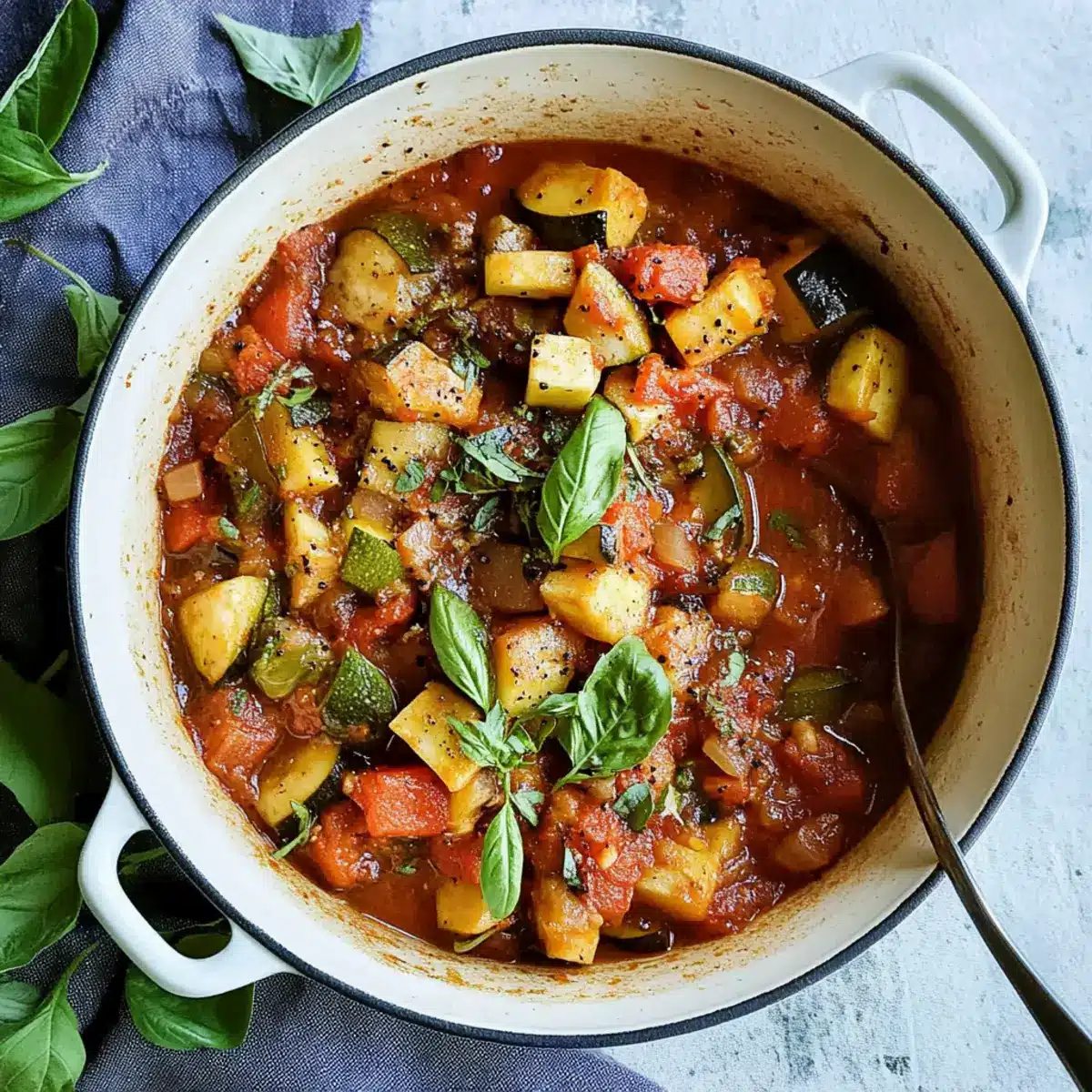
Traditional French Ratatouille Recipe FAQs
What’s the best way to choose ripe vegetables for ratatouille?
Absolutely! For the best traditional ratatouille, look for vegetables that feel firm and are free of blemishes. Select eggplants that are shiny and heavy for their size, zucchini should be small yet firm, and bell peppers should have vibrant, unblemished skins. When choosing tomatoes, opt for ones that are ripe, fragrant, and slightly soft to the touch for maximum juiciness.
How should I store leftover ratatouille?
You can store your traditional ratatouille in an airtight container in the fridge for up to 4-5 days. This way, it continues to enhance in flavor as the ingredients meld together. Just be sure it’s cooled down to room temperature before sealing it up to maintain its freshness.
Can I freeze ratatouille?
Yes, you can freeze traditional ratatouille for future meals! Allow it to cool completely, then transfer it to freezer-safe bags or containers, removing as much air as possible. It can be stored for up to 2-3 months. When you’re ready to enjoy it again, just thaw it overnight in the fridge and reheat on the stovetop.
What can I do if my ratatouille turns out too watery?
Very! If your traditional ratatouille has excess liquid, the vegetables might have released too much moisture. Simply simmer the ratatouille uncovered over medium heat for a few more minutes to allow the liquid to reduce. Stir occasionally to prevent sticking, and don’t forget to taste and adjust seasonings if necessary.
Is this dish safe for pets or those with certain dietary restrictions?
When considering pets, it’s best to keep ratatouille away from dogs and cats since some ingredients, like garlic and onions, can be harmful to them. Additionally, traditional ratatouille is vegan and gluten-free, but always check for specific allergies or sensitivities, especially regarding added herbs or seasonings.
How can I enhance the flavors of my ratatouille?
To elevate the flavor profile of your traditional ratatouille, consider these steps:
- After chopping your dried herbs, rub them between your fingers to release their oils before adding them to the pot.
- Let the dish sit for a day overnight in the fridge; the flavors will deepen beautifully.
- Finally, garnish with fresh herbs like basil right before serving to brighten the dish even more, creating a wonderfully aromatic experience!
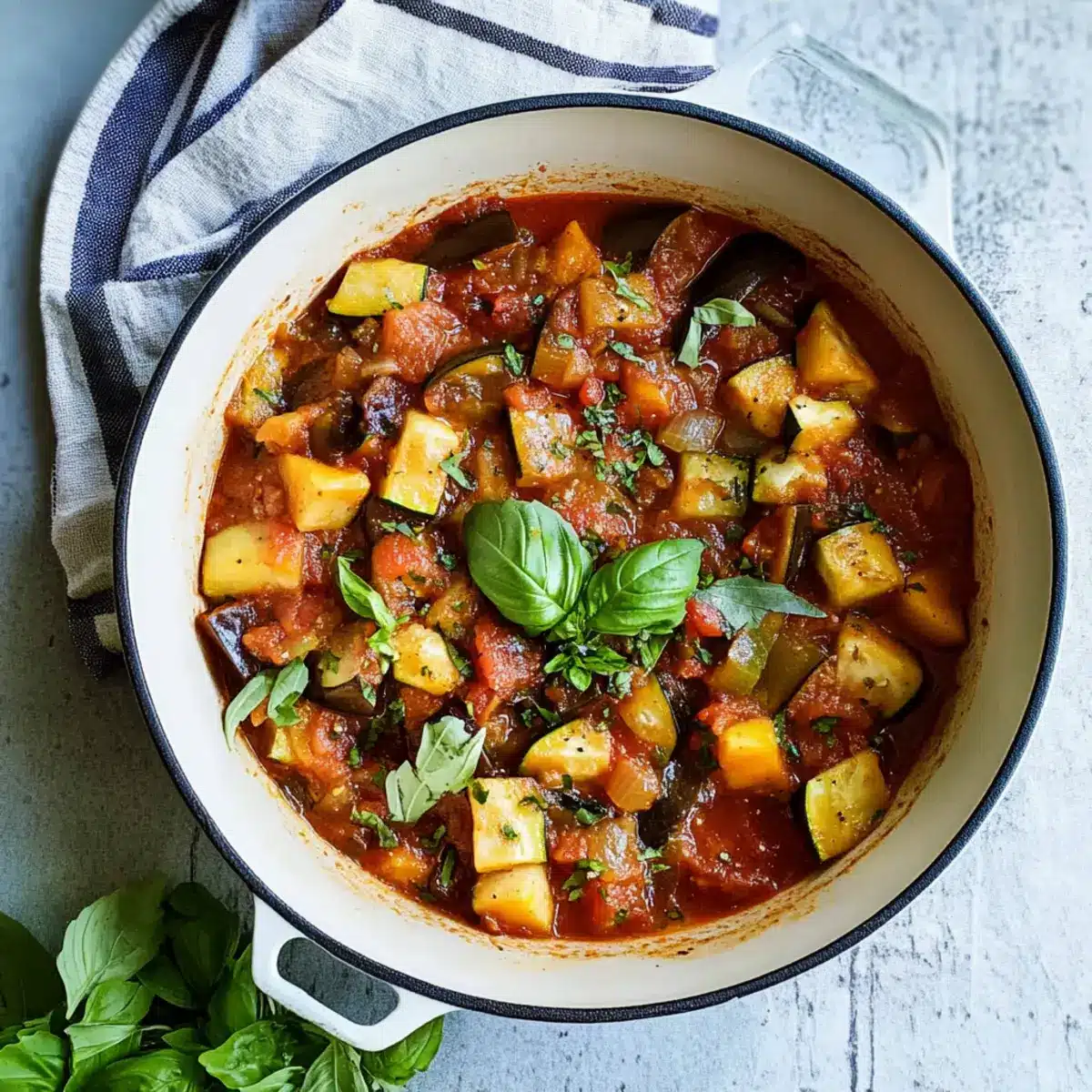
Discover the Magic of Traditional Ratatouille Today
Ingredients
Equipment
Method
- Begin by dicing the eggplant into bite-sized pieces and placing it in a colander. Sprinkle generously with salt, allowing it to drain for 20–30 minutes.
- In a large Dutch oven, heat olive oil over medium heat. Add the drained eggplant and sauté for about 5–7 minutes until softened.
- Add diced zucchini and yellow squash in the same pot, cooking for 4–5 minutes until slightly golden.
- Add chopped red onion and sauté for 4–5 minutes until translucent, then incorporate diced bell peppers and cook for an additional 3–4 minutes.
- Stir in chopped plum tomatoes and minced garlic, cooking for 1-2 minutes until fragrant.
- Pour in dry white wine and simmer for 1 minute. Then, add crushed tomatoes, bay leaf, dried oregano, and crushed red pepper flakes.
- Reduce heat to low and let the ratatouille simmer uncovered for 20–25 minutes.
- Before serving, season with salt and pepper to taste. Stir in fresh basil.
Leave a Reply