
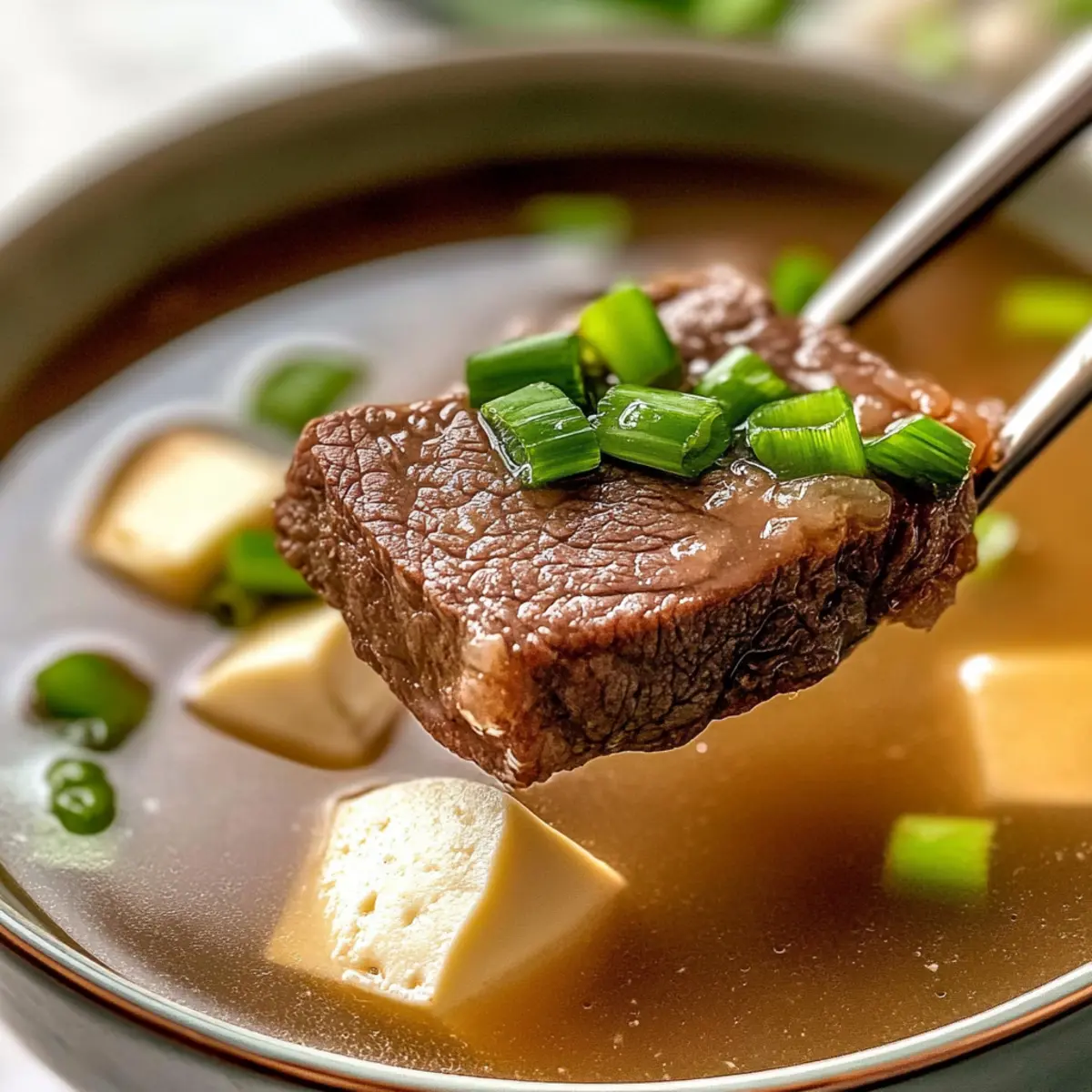
As I stepped into the kitchen on a brisk winter evening, the need for something cozy quickly became apparent. There’s nothing quite like a bowl of Korean Winter Soup to wrap you in warmth and comfort, especially after a chilly day. This delightful soup, featuring tender beef short ribs and soft tofu, is a true embrace of flavors, simmered to perfection alongside aromatic vegetables. Not only is it a delicious way to fend off the winter chill, but it also caters to diverse diets with easy variations for vegetarians or those seeking gluten-free alternatives. Imagine sharing this heartwarming dish with your loved ones, knowing that with each spoonful, you’re creating lasting memories and a sense of belonging. Ready to stir up some joy in your kitchen? Let’s dive into this soul-soothing recipe!
Why is Korean Winter Soup a Must-Try?
Comforting warmth: This Korean Winter Soup is perfect for those chilly nights, enveloping you in a hug of warmth with every spoonful.
Flavorful depth: The rich broth, simmered with tender beef and soft tofu, creates a robust flavor that’s hard to resist.
Versatile options: With alternatives for both meat lovers and vegetarians, everyone can enjoy this delightful dish. Consider pairing it with a bowl of your favorite Bean Soup Warms for more cozy options!
Quick prep: With straightforward steps, you’ll have a hearty meal ready in no time, saving you from fast-food fatigue.
Healthy choice: Packed with protein and nutrients, it’s a guilt-free indulgence perfect for nurturing your body during the long winter months.
Korean Winter Soup Ingredients
• Dive into the heart of comfort with this Korean Winter Soup!
For the Soup base
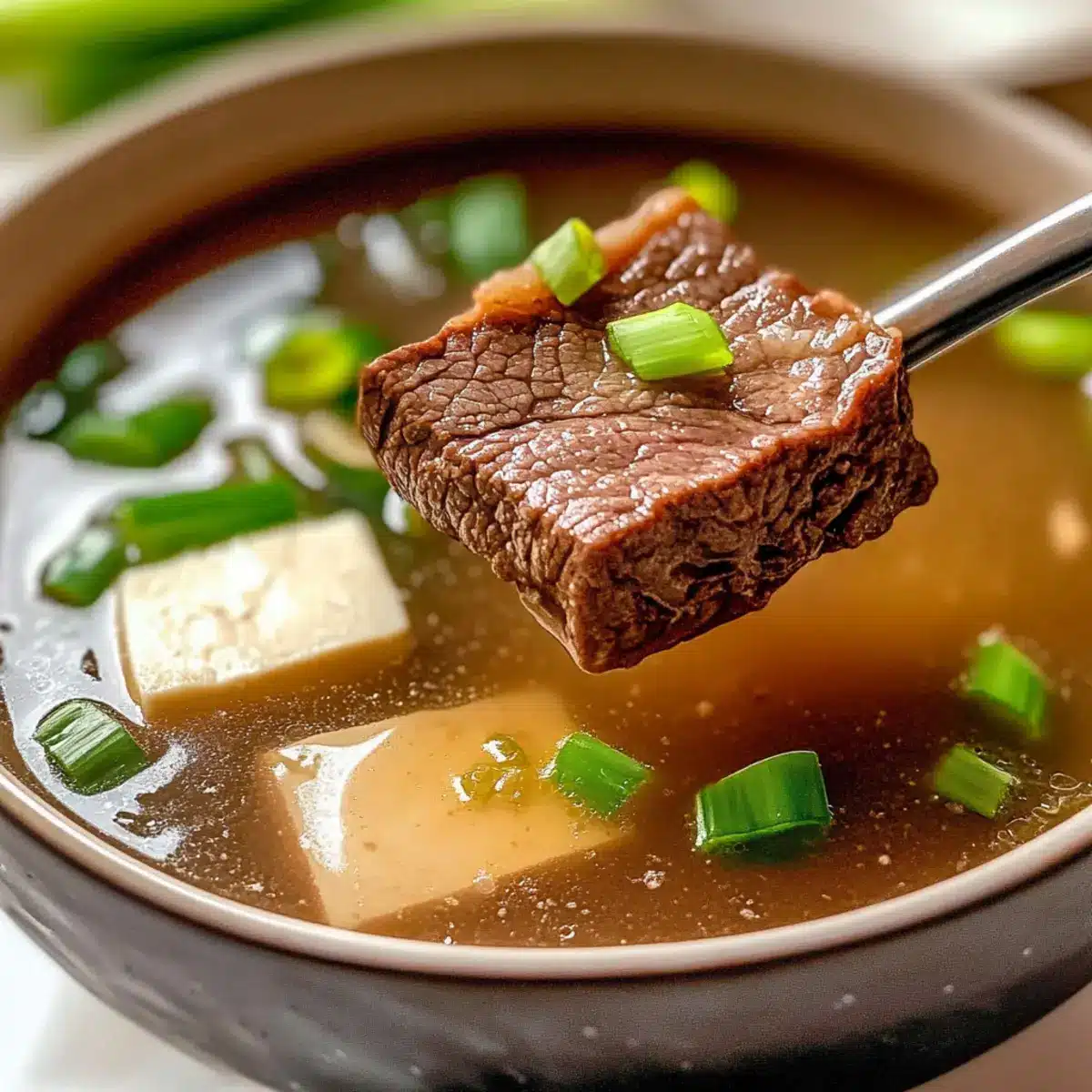
- Beef Short Ribs – provide rich flavor and tenderness in the broth, creating an irresistibly hearty base.
- Soft Tofu – adds creaminess and protein; for a vegetarian option, swap for large portobello mushrooms or seitan, adjusting cook times.
- Korean Leek (or Green Onions/Chives) – offers aromatic depth; substitute with regular leeks if needed but adjust quantity for milder flavor.
- Guk Ganjang (Korean Soup Soy Sauce) – essential for umami depth; can be swapped with regular soy sauce mixed with fish sauce, or use tamari for a gluten-free version.
For the Aromatic Boost
- Radish – infuses the broth with delicate flavor; must be sliced and cooked until tender for a comforting texture.
- Yellow Onion – a flavor base essential for depth; incorporate it whole with skin on for deeper, richer notes.
- Ginger – adds warmth and spice; freshly grated ginger works best to enhance the flavor.
- Garlic – totally transformative for the broth; consider adding extra for a garlicky kick.
This Korean Winter Soup promises heartwarming flavors and cozy vibes, making it a staple for chilly evenings!
Step‑by‑Step Instructions for Comforting Korean Winter Soup with Tender Beef and Tofu
Step 1: Soak the Beef
Start by soaking the beef short ribs in cold water for about 1 hour. This process helps to draw out excess blood, ensuring a cleaner broth. If you’re short on time, you can alternatively flash boil the ribs for a few minutes, then discard the water to achieve similar results.
Step 2: Prepare the Aromatics
While the beef is soaking, take this time to chop the ginger and garlic, and slice the green onions. Keep one yellow onion whole, as it will be added later for a deeper flavor profile. The aromatic preparation is essential to build a rich and comforting broth for your Korean winter soup.
Step 3: Combine Ingredients in a Pot
In a large stock pot, combine the soaked beef short ribs, chopped aromatics, and 10 cups of water. Bring the mixture to a boil over medium-high heat, watching as the steam rises and the ingredients start to meld together. This initial boiling stage is critical for infusing the broth with flavor.
Step 4: Skim the Foam
Once boiling, reduce the heat to medium-low and begin to skim off any foam that accumulates on the surface. This step is essential for achieving a clear broth in your comforting Korean winter soup. Keep an eye on the pot and skim regularly for about 5 minutes.
Step 5: Simmer the Broth
Allow the soup to simmer uncovered on medium-low heat for about 1 hour. As it cooks, the beef will become tender and flavorful, while the kitchen fills with inviting aromas. Periodically check and skim off any remaining foam, ensuring a beautifully clear broth.
Step 6: Add the Radish
After an hour of simmering, add in the sliced radish, continuing to simmer for an additional 20 minutes. The radish will soften and lend delicate flavor to the broth, enhancing the overall comfort of your Korean winter soup. You’ll know it’s ready when the radish becomes fork-tender.
Step 7: Remove Aromatics
Once the radish is tender, carefully remove all the aromatics and the whole onion from the pot, leaving behind the rich broth and tender beef short ribs. This step ensures your soup is smooth and avoids any undesirable bits in the final serving.
Step 8: Season the Broth
To enhance the flavor of your Korean winter soup, season the broth with guk ganjang, sea salt, and additional chopped garlic. Let it simmer for another 10 minutes on low heat. Tasting as you go allows you to adjust the seasoning according to your palate, creating a truly personalized dish.
Step 9: Garnish and Serve
Finally, ladle the comforting Korean winter soup into bowls, garnishing with sliced green onions and a sprinkle of black pepper. Serve hot, ideally with a bowl of white rice on the side for a complete meal. The broth should be rich and inviting, a perfect end to a chilly day!
Expert Tips for Korean Winter Soup
- Soaking Ribs: Soak the beef short ribs thoroughly to draw out excess blood, enhancing broth clarity and flavor. Skipping this step can lead to a cloudier soup.
- Balanced Seasoning: Always taste before serving! Different soy sauces vary in saltiness, so adjust seasoning gradually, ensuring the final soup is perfectly balanced.
- Vegetarian Option: If using portobello mushrooms or seitan, add them later in the cooking process to maintain their texture and avoid overcooking.
- Aromatics Matter: For a deeper flavor, retain the whole onion during cooking. Don’t forget to remove it later for a smoother broth in your Korean winter soup.
- Skimming Foam: Do not overlook the skimming step! Regularly removing foam will yield a crystal-clear broth, enhancing both presentation and taste.
- Storage Reminder: This soup tastes even better the next day! Refrigerate for up to three days, allowing flavors to meld and improve the overall dish.
Korean Winter Soup Variations
Feel free to customize your Korean Winter Soup to suit your palate or dietary needs—let your creativity flow!
- Dairy-Free: Substitute soft tofu with silken tofu, ensuring it blends beautifully into the broth.
- Vegetarian Delight: Replace beef short ribs with hearty portobello mushrooms or seitan for a satisfying alternative. Adjust cooking time for tenderness.
- Gluten-Free: Swap guk ganjang with tamari or coconut aminos to achieve that delicious umami flavor without the gluten.
- Spicy Kick: Add sliced fresh chili or gochugaru to the broth for an exciting heat that will warm you even more.
- Umami Boost: Incorporate miso paste instead of soy sauce for a uniquely rich flavor profile that elevates your soup.
- Nutty Flavor: Drizzle with sesame oil just before serving for an added layer of depth that complements the other ingredients.
- Extra Veggies: Toss in a handful of spinach or bok choy during the last few minutes of cooking for a nutrient-rich twist.
- Hearty Grains: Serve the soup over cooked rice noodles or quinoa for a filling, comforting meal that elevates the experience.
After savoring this comforting delight, you might want to try pairing it with a comforting bowl of Winter Spice Vanilla Pudding for dessert or explore another flavorful adventure with a cozy Reuben Soup Cozy. So many ways to enjoy deliciousness!
How to Store and Freeze Korean Winter Soup
Fridge: Store your Korean Winter Soup in an airtight container in the refrigerator for up to 3 days. The flavors will deepen as it sits, making it even more delightful to enjoy!
Freezer: Freeze the soup in portioned airtight containers for up to 3 months. Leave some space at the top for expansion as it freezes to prevent containers from cracking.
Reheating: Reheat frozen soup in the refrigerator overnight, then on the stove, adding a little water if needed to maintain a good consistency. Microwave in a bowl, stirring frequently, until heated through.
Separating Ingredients: If possible, separate tofu and beef from the broth before freezing. This helps maintain texture and flavor, ensuring each component shines when reheated.
What to Serve with Comforting Korean Winter Soup with Tender Beef and Tofu
Cozy up your dining table with delightful pairings that elevate your comforting Korean winter soup experience.
-
Steamed White Rice: Complements the rich broth, allowing you to savor every drop of flavor while adding a satisfying texture.
-
Kimchi: This tangy, fermented side adds a spicy crunch that beautifully balances the soup’s creaminess and enhances your meal’s flavor profile.
-
Savory Pancakes: Crispy and savory, Korean pancakes (like pajeon) provide a delightful texture contrast and a fun, shareable dish for your table.
-
Pickled Vegetables: Bright and zesty, these pickles create a refreshing contrast to the warm soup, helping to cleanse the palate between bites.
-
Garlic Butter Baguette: Perfect for dipping, the buttery goodness of freshly baked bread will soak up the flavorful broth, bringing warmth to your meal.
-
Green Salad: A light salad with citrus vinaigrette adds brightness and freshness, awakening your taste buds and rounding out the comforting tones of the dish.
-
Sake or Soju: These traditional Korean beverages offer a smooth complement to the meal, enriching the experience of sharing warm, sultry flavors.
-
Dessert Option: A slice of sweet rice cake or orange slices can add a hint of sweetness to your meal, balancing the savory notes of your hearty soup.
Make Ahead Options
These comforting Korean Winter Soup portions are perfect for busy weeknights! You can prepare the broth up to 24 hours in advance by following the initial steps of soaking and simmering the beef short ribs with aromatics. Once cool, refrigerate the soup base in an airtight container and reheat on the stove when ready to serve. Additionally, you can chop the vegetables and keep them in the fridge for up to 3 days to save precious prep time. To ensure the flavors remain vibrant, simply add the radish during the last 20 minutes of simmering before serving. You’ll have a heartwarming meal ready in no time, just as delicious as if made fresh!
Korean Winter Soup Recipe FAQs
What type of beef is best for this soup?
Absolutely! For this Korean Winter Soup, beef short ribs are ideal as they offer rich flavor and tenderness. If you can’t find them, alternatives like beef shank or oxtail work wonderfully too, adding depth to the broth.
How should I store the leftover soup?
Very! You can keep your Korean Winter Soup in an airtight container in the fridge for up to 3 days. The flavors will continue to meld, potentially making it even tastier the next day! Just remember to give it a quick stir before serving again.
Can I freeze Korean Winter Soup?
Of course! To freeze the soup, pour it into airtight containers, leaving a bit of space at the top for expansion—this is key to preventing cracks. It can be kept in the freezer for up to 3 months. When you’re ready to enjoy it again, just thaw it in the refrigerator overnight and reheat as needed.
What if my soup turns cloudy?
If your Korean Winter Soup is cloudy, it most likely means that the foam wasn’t skimmed off during cooking. Don’t fret! For next time, remember to frequently skim the surface while boiling, which keeps your broth clear and appetizing.
Are there any dietary considerations for this recipe?
Absolutely! This Korean Winter Soup is quite versatile. For those needing gluten-free options, simply swap guk ganjang with tamari or coconut aminos. Plus, if you have vegetarian guests, substituting the beef with large portobello mushrooms or seitan will ensure everyone can enjoy this cozy dish together!
Can I use other vegetables in the soup?
Yes, very much! Feel free to adapt the soup to your preferences by incorporating other tender vegetables like spinach or bok choy. Add these in the final stages of cooking to maintain their vibrant texture and nutrients.
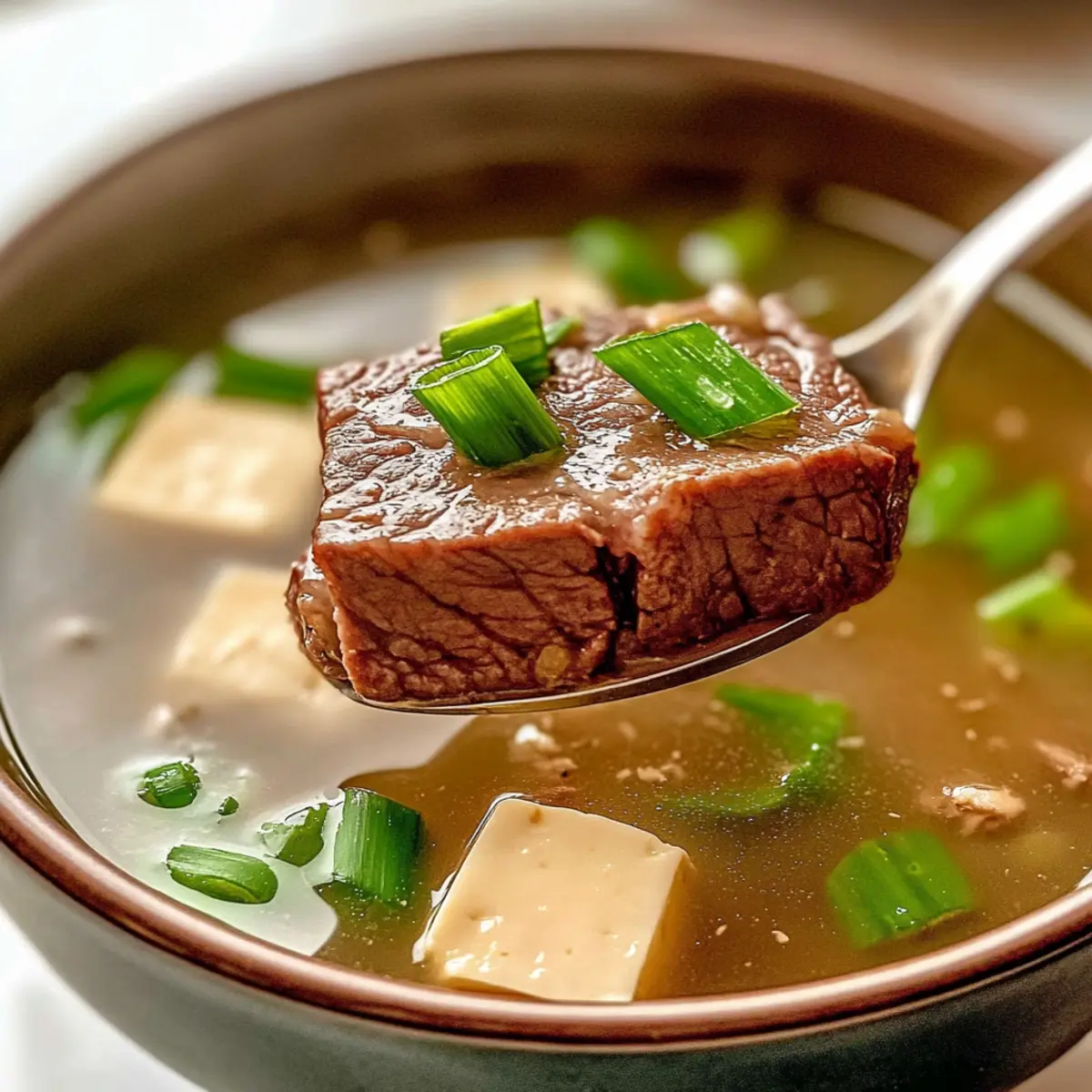
Heartwarming Korean Winter Soup for Cozy Nights In
Ingredients
Equipment
Method
- Start by soaking the beef short ribs in cold water for about 1 hour to draw out excess blood.
- Chop the ginger and garlic, and slice the green onions. Keep one yellow onion whole for later.
- In a large stock pot, combine the soaked beef short ribs, chopped aromatics, and 10 cups of water. Bring to a boil.
- Once boiling, reduce heat to medium-low and skim off any foam that accumulates on the surface for about 5 minutes.
- Allow the soup to simmer uncovered on medium-low heat for about 1 hour.
- After an hour, add in the sliced radish and continue to simmer for an additional 20 minutes until tender.
- Carefully remove all the aromatics and the whole onion from the pot.
- Season the broth with guk ganjang, sea salt, and additional chopped garlic. Let it simmer for another 10 minutes.
- Ladle the soup into bowls and garnish with sliced green onions and black pepper. Serve hot with a bowl of white rice.
Leave a Reply