
There’s a certain magic that happens when you take leftover beef bulgogi and transform it into a heartwarming stew. This Quick and Hearty Korean Beef Bulgogi Stew with Glass Noodles is one of those soul-soothing recipes that never fails to create a cozy feeling on a chilly day. In less than 30 minutes, you can savor tender marinated beef mingling with chewy glass noodles in a savory broth. The beauty of this dish lies not only in its rich flavors but also in its convenience—perfect for a weeknight dinner or a comforting weekend treat. It’s a versatile meal that brings together the essence of Korean cuisine, all in a single pot. Are you ready to dive into this delightful fusion of flavors? Let’s get cooking!
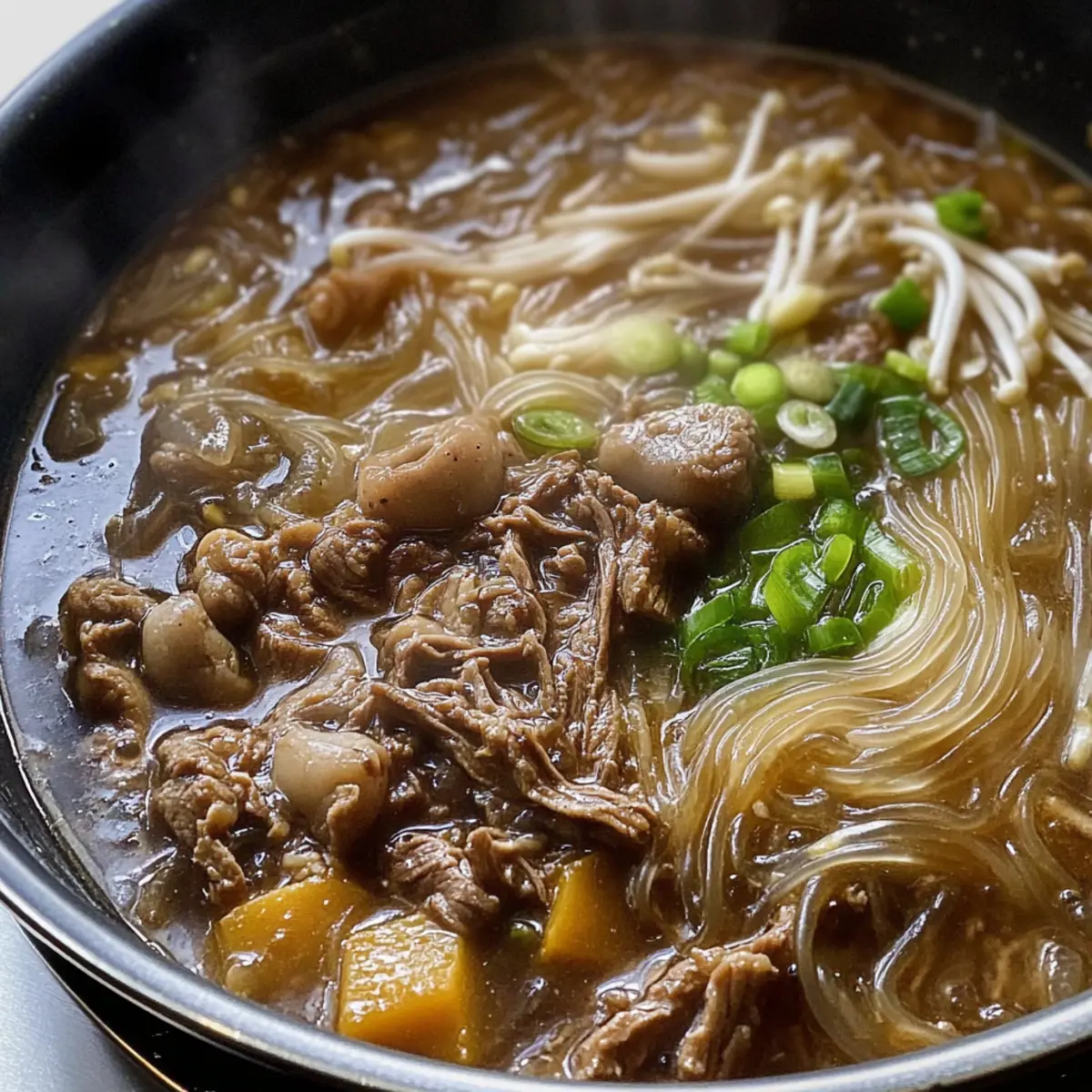
Why is this stew a weeknight favorite?
Quick Preparation: This dish comes together in under 30 minutes, making it perfect for busy weeknights.
Flavorful Harmony: The tender beef bulgogi paired with chewy glass noodles creates a delightful flavor and texture combination that’s sure to impress.
Versatile Ingredients: It’s easy to customize with vegetables like bok choy or napa cabbage for added nutrition, or even swap noodles according to your preference!
Comfort in a Bowl: Cozy up with a steaming bowl of this hearty stew, ideal for chilly days, oozing warmth and comfort.
Perfect Leftover Makeover: Transforming leftover beef bulgogi into this luxurious stew is not just tasty but also eco-friendly, minimizing food waste.
For other comforting recipes, check out our Cider Beef Stew or indulge in a classic Chinese Beef Broccoli.
Korean Beef Bulgogi Stew Ingredients
• Transform leftover bulgogi into this delightful stew.
For the Stew
- Korean Beef Bulgogi – Provides a sweet-savory base to the broth; using leftovers enhances flavor.
- Sweet Potato Glass Noodles – Chewy texture that absorbs the broth perfectly; substitute with rice noodles for a different experience.
- Enoki Mushrooms – Adds a tender-crisp bite and earthy taste; shiitake or button mushrooms are great swaps.
- Green Onion – Offers a fresh, vibrant flavor and color; chives can be a nice alternative.
- Water – Forms the foundation for your savory broth; using beef stock deepens the flavor profile.
- Sesame Oil – Imparts a warm, nutty aroma; vegetable oil works in a pinch, but flavor will differ.
- Soy Sauce – Elevates umami notes in the broth; try tamari for a gluten-free option.
Enjoy crafting this comforting dish that embodies the essence of Korean cuisine in every bite!
Step‑by‑Step Instructions for Korean Beef Bulgogi Stew
Step 1: Soak the Noodles
Begin by soaking sweet potato glass noodles in warm water for around 10-15 minutes until they are pliable and soft. This will ensure that they absorb the rich flavors of the broth later. Keep an eye on them, as you want them fully hydrated but not mushy. Once ready, drain the noodles and set them aside for later use in your Korean Beef Bulgogi Stew.
Step 2: Heat the Pot
Place a large pot over medium heat and add the leftover beef bulgogi, breaking it apart with a spoon. Sauté the beef for about 2-3 minutes until it is heated through and slightly caramelized. Stir occasionally to prevent sticking and enhance the flavors. The aroma of the bulgogi will fill your kitchen, setting the stage for a delicious stew.
Step 3: Add Seasonings
Once the beef is warmed up, stir in the dark soy sauce and sesame oil thoroughly, ensuring every piece of bulgogi is coated. Cook for another minute, allowing the beef to absorb the spices and infuse the pot with a rich, savory scent. This step is crucial, as it forms the flavor base of your comforting Korean Beef Bulgogi Stew.
Step 4: Boil the Broth
Pour in about 4 cups of water or beef stock, bringing the mixture to a gentle boil over medium-high heat. You will notice the steam rising and the bubbling sounds as the broth begins to transform. This is the moment to adjust the seasoning if desired. The boiling broth will meld beautifully with the flavors of the beef, setting the foundation for the rest of the stew.
Step 5: Add Noodles and Mushrooms
Once boiling, carefully add the soaked glass noodles and enoki mushrooms into the pot. Stir gently to incorporate them, ensuring they’re evenly distributed in the liquid. Cook for an additional 3-4 minutes until the noodles are tender and the mushrooms are slightly softened. The broth will thicken slightly, creating a cozy and inviting stew.
Step 6: Garnish and Serve
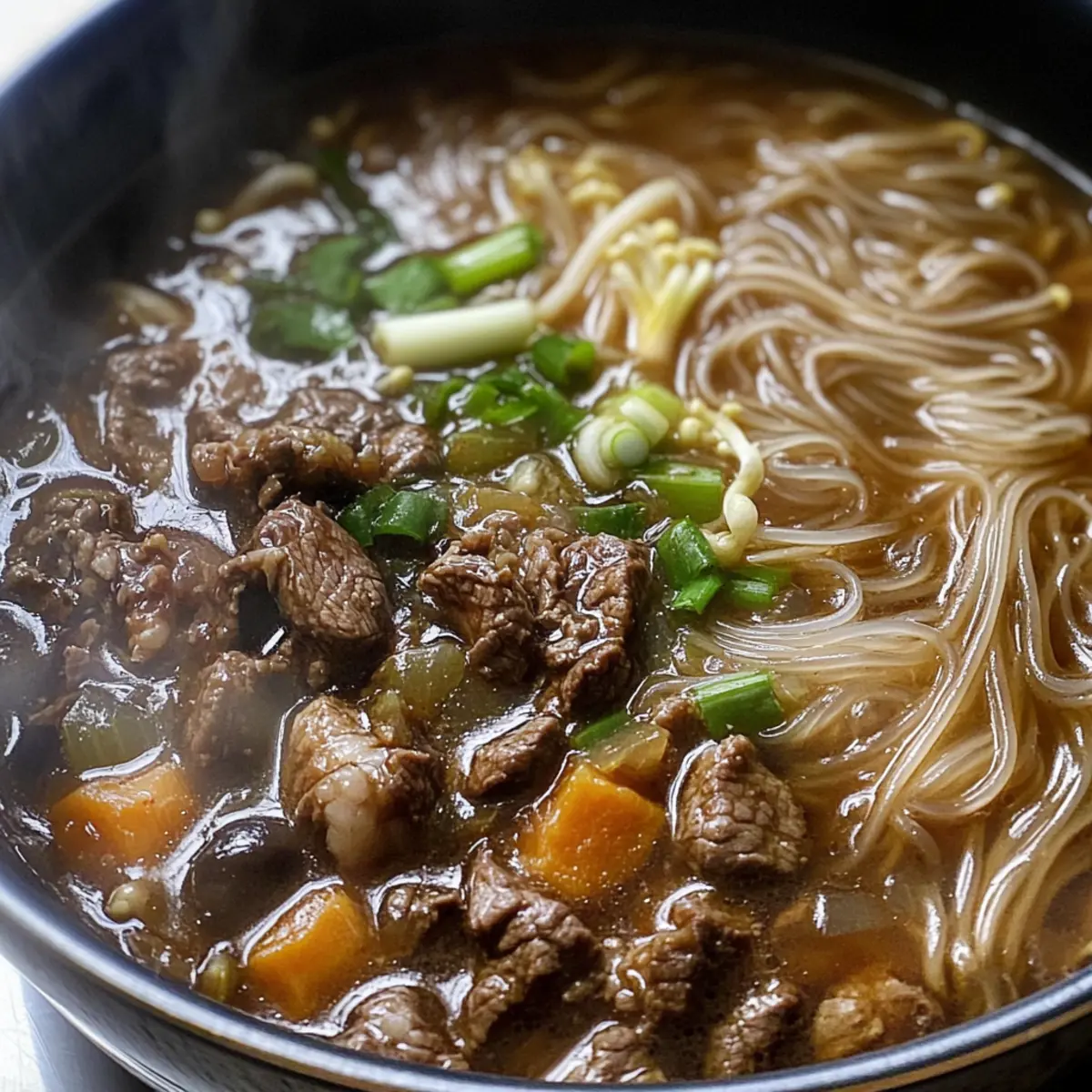
Finally, scoop the hearty Korean Beef Bulgogi Stew into bowls and garnish generously with chopped green onions for a fresh bite. Serve immediately while hot, allowing the comforting aroma to envelop your kitchen and home. This delightful meal is best enjoyed with steamed rice or your favorite Korean side dishes for a complete experience.
Make Ahead Options
Preparing Korean Beef Bulgogi Stew in advance is a fantastic way to save time on busy weeknights! You can marinate your beef bulgogi up to 24 hours ahead for enhanced flavor, and the sweet potato glass noodles can also be soaked and kept in the refrigerator until you’re ready to cook. For best results, store the noodles in water but change the water every few hours to keep them fresh. Simply heat the bulgogi in a pot, add your broth, and once boiling, stir in the noodles and enoki mushrooms for just 3-4 minutes before serving. This method ensures you’ll enjoy a delicious stew that’s just as comforting and flavorful with minimal effort!
What to Serve with Quick and Hearty Korean Beef Bulgogi Stew
Cozy up your dining experience with delightful sides that perfectly complement this heartwarming dish.
- Steamed Rice: Offers a neutral base that balances the bold flavors of the stew while soaking up the rich broth.
- Kimchi: Adds a spicy crunch that heightens the savory notes of the bulgogi, making each bite more exhilarating.
- Seasoned Spinach: A fresh side that contributes bright green color and a slightly sweet flavor, enhancing the dish’s nutritional profile.
- Korean Fried Egg (Gyeran-jjim): This fluffy egg dish adds texture and creaminess, providing a perfect contrast to the chewy noodles.
- Radish Salad: A refreshing, tangy side that cuts through the richness of the stew; its crispness enhances every mouthful.
- Barley Tea: A warm, nutty beverage that pairs beautifully with the buttery flavors of the stew, creating a harmonious meal experience.
Embrace these pairing ideas to transform your simple stew into a feast that warms the heart and pleases the palate!
Expert Tips for Korean Beef Bulgogi Stew
-
Soak Right: Ensure sweet potato glass noodles are soaked long enough to become fully pliable without becoming mushy, which might ruin the stew’s texture.
-
Adjust Cooking Times: Keep an eye on cooking times, as different types of mushrooms and vegetables vary in tenderness. Don’t let them overcook to maintain their flavors.
-
Flavorful Beef: If using fresh beef bulgogi, marinate it well before cooking to mimic the depth of flavor you get from leftovers.
-
Stock Up: For a richer broth in your Korean Beef Bulgogi Stew, consider using beef stock instead of water. It adds an extra layer of umami that elevates the dish.
-
Experiment: Feel free to add more veggies like bok choy or carrots for color and nutrition, ensuring your stew is both hearty and healthy!
Korean Beef Bulgogi Stew Variations
Explore these exciting variations to make your stew uniquely delightful!
- Dairy-Free: Replace any dairy-based sides with plant-based options like almond milk or coconut yogurt to keep things light and creamy.
- Vegetable-Packed: Stir in fresh vegetables such as bok choy, napa cabbage, or carrots for added nutrition and vibrant color! These ingredients can infuse the stew with their individual flavors while boosting its appeal.
- Heat Level: For an extra kick, add red pepper flakes or sliced jalapeños to introduce a delightful spiciness that warms the soul.
- Noodle Swaps: Substitute glass noodles with rice noodles or udon for a different texture. Each noodle type will change the essence of your stew, offering a fresh twist with every batch.
- Protein Boosts: Mix in tofu or chicken for a heartier meal. This delicious combination brings diverse textures and flavors, turn the stew into a complete feast!
- Broth Upgrades: Use beef stock instead of water for a meatier flavor profile. Your broth will have a richness that’s hard to resist!
- Herb Infusion: Garnish with fresh cilantro or basil at the end for added aroma and freshness. These fragrant herbs can elevate every bite, creating a gourmet experience at home.
Feeling inspired? Don’t forget to try our Cider Beef Stew or indulge in a classic Chinese Beef Broccoli. Happy cooking!
Storage Tips for Korean Beef Bulgogi Stew
-
Fridge: Store leftover Korean Beef Bulgogi Stew in an airtight container for up to 3 days. This allows the flavors to meld, making it even tastier when reheated!
-
Freezer: For longer storage, freeze the stew in a sealed freezer-safe container for up to 3 months. Label the container with the date for easy tracking.
-
Reheating: When ready to enjoy, thaw the frozen stew in the fridge overnight, then reheat gently on the stovetop over medium heat until warmed through.
-
Airtight Transition: Ensure to transfer any leftovers to a sealable container promptly to maintain freshness and prevent spoilage.
Korean Beef Bulgogi Stew Recipe FAQs
How do I select ripe ingredients for my stew?
Absolutely! For the best flavor, choose ripe enoki mushrooms that are firm to the touch and free of dark spots. When selecting glass noodles, look for a package that isn’t torn and feels versatile. Fresh green onions should be bright green with no wilting, and beef bulgogi should be marinated well for optimum taste. If you’re purchasing beef, opt for cuts that are well-marbled, as they tend to yield juicier and more flavorful results.
How should I store leftover Korean Beef Bulgogi Stew?
Very! Store any leftover stew in an airtight container in the refrigerator for up to 3 days. This not only preserves the flavors but also allows them to meld, which can enhance the taste the next day! Be sure to let the stew cool before sealing it to avoid condensation inside the container.
Can I freeze Korean Beef Bulgogi Stew?
Absolutely! To freeze, transfer the cooled stew into a freezer-safe container, leaving about an inch of space for expansion. It will keep well for up to 3 months. For best taste, label the container with the date. When ready to enjoy, thaw it overnight in the refrigerator and reheat gently on the stovetop over medium heat until warmed through.
What should I do if the stew is too salty?
No worries! If your stew turns out too salty, you can balance it by adding a potato while it simmers; the potato will absorb some of the excess salt as it cooks. Allow it to cook for 10-15 minutes, then remove it before serving. Alternatively, add more broth or water—just remember to season as needed afterward.
Is there a gluten-free option for this stew?
Very much so! You can easily make the Korean Beef Bulgogi Stew gluten-free by using tamari or coconut aminos instead of soy sauce. For the noodles, ensure that your selection is labeled gluten-free; rice noodles or quinoa noodles can be excellent alternatives that provide a delightful texture.
Can my pets enjoy the stew?
While it’s tempting to share, it’s best to keep the stew for human consumption only. The garlic and soy sauce make it unsuitable for pets. Always check before giving your furry friends any human food to ensure their safety!
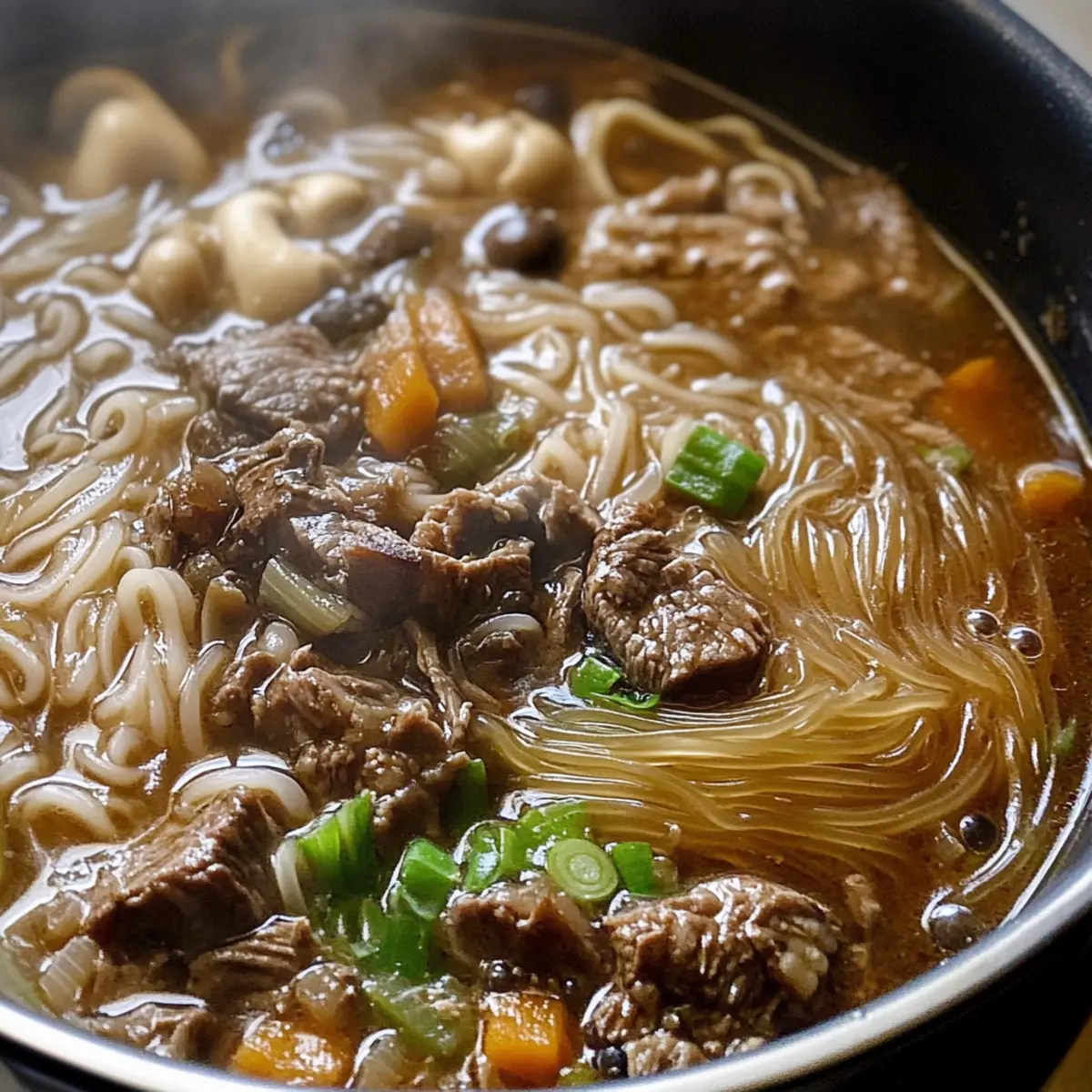
Comforting Korean Beef Bulgogi Stew You'll Want to Make Tonight
Ingredients
Equipment
Method
- Soak the sweet potato glass noodles in warm water for about 10-15 minutes until pliable. Drain and set aside.
- Heat a large pot over medium heat, add leftover beef bulgogi, and sauté for 2-3 minutes until heated through.
- Stir in dark soy sauce and sesame oil, cooking for another minute for the flavors to meld.
- Pour in water or beef stock and bring to a gentle boil.
- Add soaked glass noodles and enoki mushrooms, cooking for an additional 3-4 minutes until the noodles are tender.
- Scoop into bowls and garnish with chopped green onions. Serve hot.
Leave a Reply